
Fat Tire vs Regular E-Bike
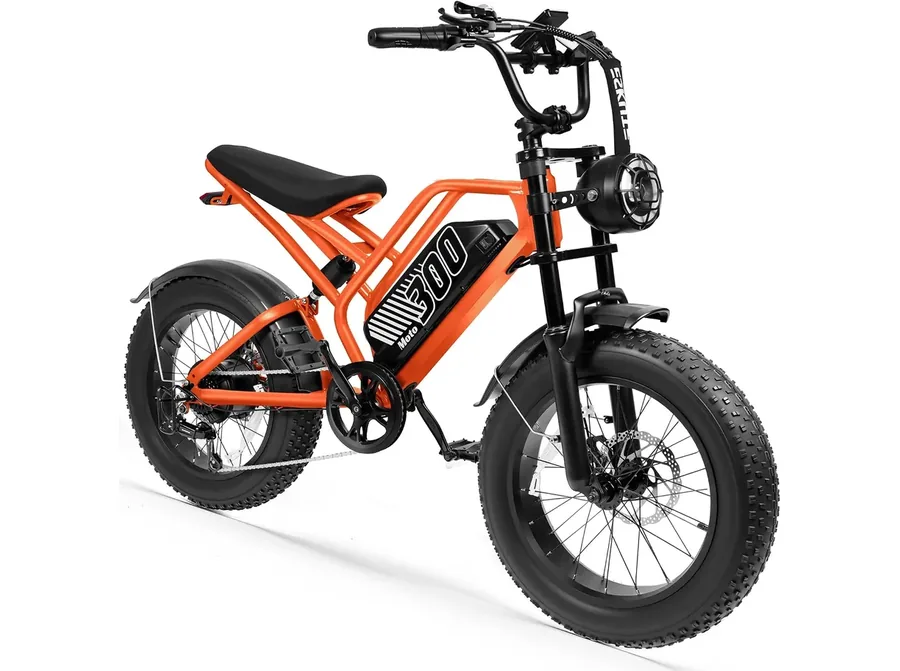
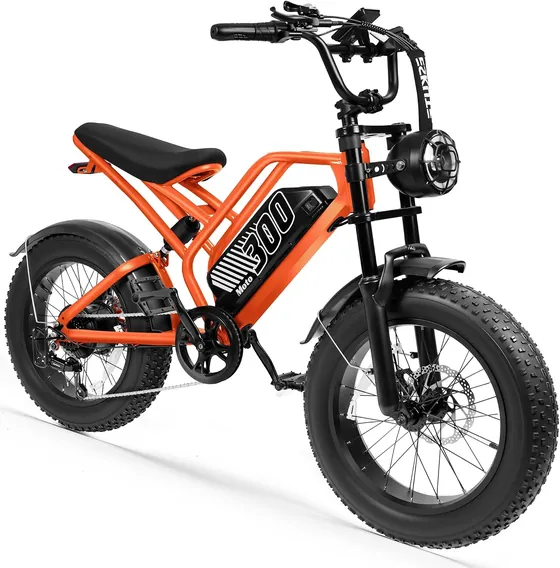
Choose a fat-tire e-bike for routes where loose surfaces or broken pavement are a regular part of the ride. For smooth-road commuting, compare a regular-width bike too, especially if carrying and storage are daily chores. Tire width helps explain the tradeoff, but it does not settle the whole purchase.
Start with the route you repeat
Write down the surfaces on your ordinary trip, rather than the most adventurous ride you might take someday. Separate the paved commute from the dirt connector, gravel driveway or beach access. Note whether the rough section is unavoidable or simply an occasional detour. A bike chosen for a short stretch of sand still has to work for the rest of your week.
Fat tires are usually around four inches wide; a typical commuter tire is closer to two. The larger contact area can help on loose ground. ESKUTE lists paved roads, mountain roads, beach sand, snow and muddy trails for the V300. That list describes intended terrain, not permission to tackle every slope or condition. Surface depth and rider control still matter.
Separate cushioning from traction
A large tire can soften chatter from rough pavement, and both ESKUTE e-bikes discussed here have suspension. Those are useful comfort features when the route is patched and uneven. They do not make a curb disappear, and a softer-feeling ride is not evidence that a slippery surface has become predictable.
Do not buy on a blanket claim that a wider tire is safer. Grip also depends on the tire and the surface under it. Treat comfort and control as separate questions when comparing bikes: can you tolerate the road vibration, and can you handle the bike through starts, stops and turns? Neither answer follows from width alone.
Count the work off the saddle
The V100 weighs about 70.2 lb. That figure deserves attention before an upstairs owner focuses on its compact wheels. Carrying it once on moving day is a different requirement from lifting it every evening. Walk the actual entrance, including door closers, tight landings and any place where you would have to hold the bike while opening a door.
For a vehicle rack, check both the weight allowance and the tire tray fit. A rack that accepts the load may still be unsuitable for a wide tire. Measure the storage space with room to maneuver, not just enough space for the bike to stand still. If any unavoidable lift exceeds what you can comfortably manage, reconsider the bike before accessories.
Compare range without a width-only verdict
A narrower road-focused bike can be an attractive choice for long paved journeys, but width is not a range calculator. Compare the actual bikes, including battery configuration and the conditions behind their quoted distances. A larger battery can change the comparison; so can the way the rider uses assistance.
The V300 configuration described here has a 48V 20.8Ah battery and a published pedal-assist range of up to 85 miles. That is an upper claim, not a promise for throttle-only travel on soft ground. Leave room in your plan for load, cold weather and terrain. If a return trip depends on reaching the advertised maximum, the route needs a more conservative charging plan.
Read wheel diameter separately
Both the V100 and V300 use 4.0-inch-wide tires, but the V100 has 16-inch wheels and the V300 has 20-inch wheels. Width and diameter answer different questions. One tells you about the tire's breadth; the other helps distinguish the overall wheel setup. Two bikes labeled fat tire can therefore have quite different storage implications.
Use the product dimensions to compare the complete bikes rather than treating the smaller wheel as a guarantee of fit. For a shared hallway, elevator or vehicle, measure the available space first. A compact wheel does not establish that the handlebar, frame or full bike will clear your particular opening.
Check the configuration behind the comparison
The 48V 20.8Ah battery and up-to-85-mile pedal-assist figure refer to the standard V300 configuration described above. Before ordering, check the configuration selected on the purchase page, including its battery and package contents. Compare that selection with the specifications you intend to buy, since the model name alone does not identify the battery version or accessory kit.
Keep a note of the chosen version beside your storage measurements and range requirement. If you switch versions while shopping, revisit the comparison rather than carrying forward assumptions from the first one. Likewise, distinguish a bike-only choice from an accessory kit. A pictured extra should not enter your buying decision until the selected package confirms it is included. This avoids comparing two offers as though their contents were identical.
What might bother you after a week?
Knobby tires can hum on asphalt. That may be a minor detail on a mixed-surface leisure ride and a persistent annoyance on a quiet paved commute. Think about the surfaces you will hear them on most often. Appearance gives little help with that decision.
Also distinguish willingness to ride from willingness to manage the bike. A rider may enjoy the rough-road comfort yet dislike parking, lifting or loading it. Write the most inconvenient part of ownership next to the most appealing riding feature. If the inconvenience happens daily and the benefit happens monthly, it should carry more weight in the decision.
Narrow the choice before comparing ESKUTE models
Keep a fat-tire bike on the shortlist when its surface capability addresses a repeated need and the full bike fits your handling routine. Keep a regular-width alternative on the list when your route is predominantly smooth and portability is the constraint. Neither category wins every commute.
Once that choice is clear, compare the V100 and V300 in E-Bikes. Choose between their actual configurations, with storage measurements and the intended route beside you.